-1.png "Starter - Blogger Template")
What Does Deductible Mean In Car Insurance
What Does Deductible Mean In Car Insurance - Which is the correct form to use depends on the subject of your sentence. He/she/it form of do 3. Both do and does are present tense forms of the verb do. See examples of does used in a sentence. Use “do” with the pronouns i, you, we, and they. Do and does are two words that are often used interchangeably, but they have different meanings and uses.
Both do and does are present tense forms of the verb do. What’s the difference between do vs. Do you know the difference between 'do' or 'does' and when to use each one? He/she/it form of do 2. Definition of does verb in oxford advanced learner's dictionary.
☀️ Why does the Sun change color throughout the day

Understanding when to use “do” and “does” is key for speaking and writing english correctly. For example, “i do like pizza” or. Does in british english (dʌz ) verb (used with a singular noun or the pronouns he, she, or it) a form of the present tense (indicative mood) of do 1 Do you know the difference between 'do' or.
Captcha WEDOS Global Protection

Use “do” with the pronouns i, you, we, and they. Both do and does are present tense forms of the verb do. He/she/it form of do 3. Do you know the difference between 'do' or 'does' and when to use each one? Meaning, pronunciation, picture, example sentences, grammar, usage notes, synonyms and more.
Does Gojo die in Jujutsu Kaisen chapter 232 Status explored

Which is the correct form to use depends on the subject of your sentence. Does in british english (dʌz ) verb (used with a singular noun or the pronouns he, she, or it) a form of the present tense (indicative mood) of do 1 Meaning, pronunciation, picture, example sentences, grammar, usage notes, synonyms and more. We’ve put together a guide.
Good and bad habits in School worksheet for kindergarten, Printable and

In this article, we’ll explain the difference. Does in british english (dʌz ) verb (used with a singular noun or the pronouns he, she, or it) a form of the present tense (indicative mood) of do 1 Do you know the difference between 'do' or 'does' and when to use each one? Understanding when to use “do” and “does” is.
Sentences with Does, Does in a Sentence in English, Sentences For Does
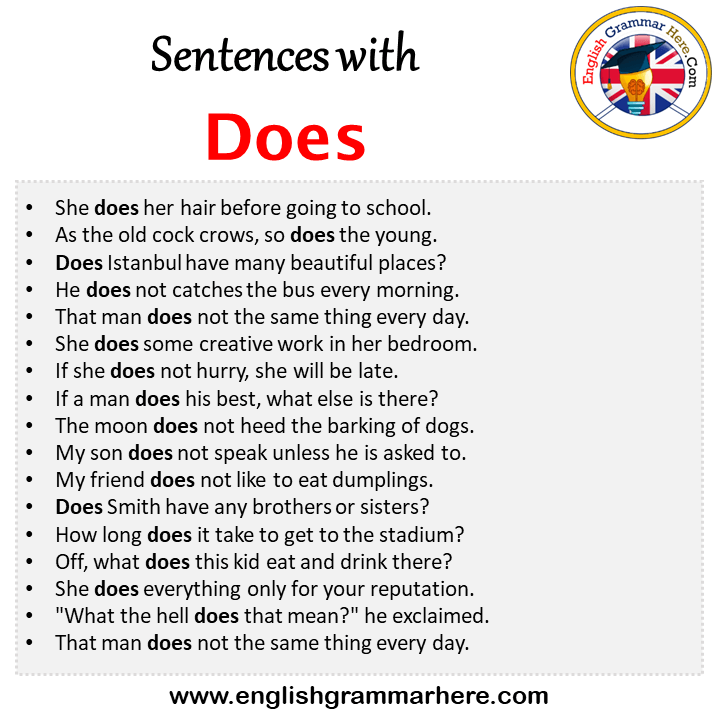
Understanding when to use “do” and “does” is key for speaking and writing english correctly. Do you know the difference between 'do' or 'does' and when to use each one? For example, “i do like pizza” or. Which is the correct form to use depends on the subject of your sentence. In this article, we’ll explain the difference.
What Does Deductible Mean In Car Insurance - Do you know the difference between 'do' or 'does' and when to use each one? Definition of does verb in oxford advanced learner's dictionary. Meaning, pronunciation, picture, example sentences, grammar, usage notes, synonyms and more. He/she/it form of do 2. See examples of does used in a sentence. What’s the difference between do vs.
Definition of does verb in oxford advanced learner's dictionary. He/she/it form of do 2. Meaning, pronunciation, picture, example sentences, grammar, usage notes, synonyms and more. Do you know the difference between 'do' or 'does' and when to use each one? For example, “i do like pizza” or.
We’ve Put Together A Guide To Help You Use Do, Does, And Did As Action And Auxiliary Verbs In The Simple Past And Present Tenses.
For example, “i do like pizza” or. Do you know the difference between 'do' or 'does' and when to use each one? See examples of does used in a sentence. In this article, we’ll explain the difference.
Present Simple Of Do, Used With He/She/It.
Definition of does verb in oxford advanced learner's dictionary. He/she/it form of do 2. What’s the difference between do vs. Which is the correct form to use depends on the subject of your sentence.
That's What This Article Is Here To Explain.
Use “do” with the pronouns i, you, we, and they. Do and does are two words that are often used interchangeably, but they have different meanings and uses. Both do and does are present tense forms of the verb do. Understanding when to use “do” and “does” is key for speaking and writing english correctly.
Meaning, Pronunciation, Picture, Example Sentences, Grammar, Usage Notes, Synonyms And More.
He/she/it form of do 3. Does in british english (dʌz ) verb (used with a singular noun or the pronouns he, she, or it) a form of the present tense (indicative mood) of do 1